Corporate travel demands flawless execution. When you are flying into a major metro area for high-stakes meetings, a presentation on Capitol Hill, or a multi-million-dollar deal, ground transportation cannot be an afterthought. For years, executive travelers faced a simple choice: call a traditional limousine company or rely on an app. Today, the choice frequently boils down to a comparison between a professional black car service vs Uber Black.
While both options promise a sleek, dark vehicle and an upgraded experience compared to standard taxis or basic rideshares, they operate on completely different business models. One relies on a localized infrastructure of dedicated employee chauffeurs, while the other functions through an on-demand marketplace of independent gig workers. For a corporate traveler, these differences can mean the difference between making a flight or missing a keynote address.
In this comprehensive guide, we will break down the structural, operational, and qualitative differences between a dedicated black car service and Uber Black. You will learn how each service impacts your productivity, your corporate duty of care compliance, and your peace of mind. Ultimately, we will establish why a professional service like RDV Limousine remains the definitive gold standard for elite business travel.
Why Is Reliability the Most Critical Factor in Executive Ground Transportation?
When analyzing ground transportation options, punctuality reigns supreme. A professional black car service treats time as a non-negotiable asset. When you book a private vehicle in advance, that car and chauffeur are reserved exclusively for your scheduled window. The company utilizes advanced dispatch software to monitor your flight status in real time, track regional traffic patterns, and pre-plan the most efficient routes.
Uber Black, by contrast, operates primarily on a real-time supply-and-demand algorithm. Even when using the “Reserve” feature on the mobile application, the platform does not permanently assign a specific driver hours in advance. Instead, it pushes the request out to nearby available drivers shortly before your pickup window. If traffic is gridlocked or driver supply is low, your request can linger unanswered, or a driver may cancel at the last minute if a more lucrative trip pops up.
For business travel, an unfulfilled ride request can disrupt an entire itinerary. Professional operators understand that a corporate traveler cannot afford to wait on a curb while an app searches for a replacement vehicle. Dedicated executive car services offer precision scheduling, ensuring that your vehicle is staged at the pickup location ten to fifteen minutes before your scheduled departure time.
What Is the Difference Between a Professional Chauffeur and an On-Demand Driver?
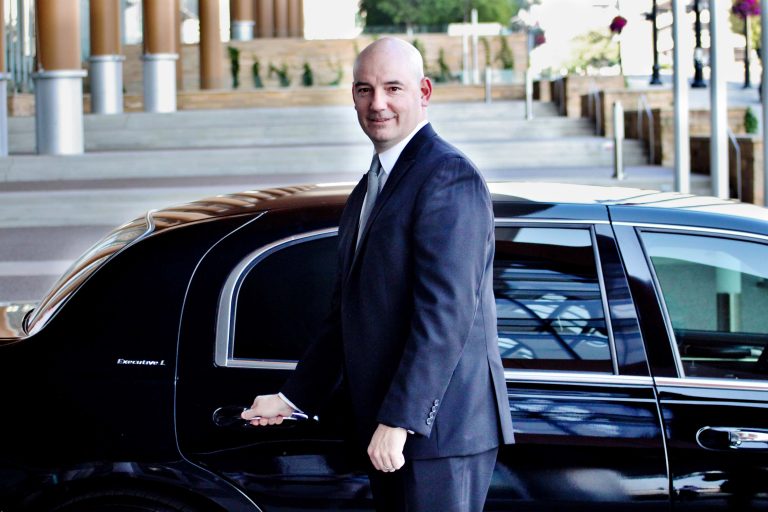
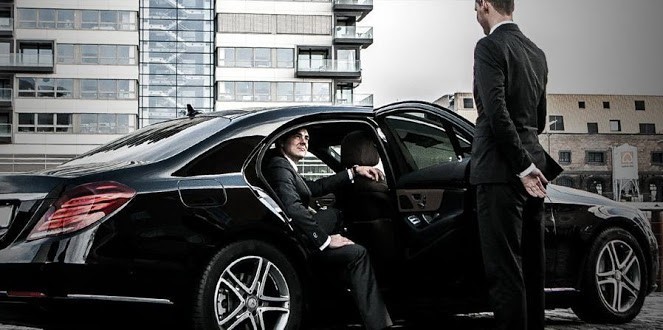
The human element represents the widest gap between professional transportation and algorithmic ride-hailing tiers. A professional chauffeur undergoes rigorous, ongoing background checks, medical screenings, and extensive defensive driving training. Chauffeurs are hospitality professionals whose career is built around customer service, passenger discretion, and localized geographic expertise. They understand corporate etiquette, assist seamlessly with luggage, and respect your need for a quiet environment to conduct business.
An Uber Black driver is an independent contractor who meets specific vehicle criteria and possesses a commercial registration where required by local law. However, they do not receive formal hospitality training from a centralized management team. Their commitment to your trip is transactional, governed by an app rather than a corporate code of conduct. Driver behavior, route knowledge, and general professionalism can vary wildly from one trip to the next.
Furthermore, traditional black car services guarantee a level of privacy that ride-hailing apps simply cannot match. When you step into an executive sedan, you can make confidential phone calls, review sensitive financial documents, or prepare for board meetings without worrying about an untrained driver overhearing proprietary corporate information.
How Do Fleet Standards and Vehicle Maintenance Compare Between the Two Services?
Consistency is a key metric for corporate travel planners. When you book a premium black car service with an established company like RDV Limousine, you receive a guaranteed class of vehicle from a meticulously maintained fleet. Whether it is a Cadillac Escalade, a Mercedes-Benz S-Class, or an executive SUV, the vehicles undergo strict daily detailing, comprehensive safety inspections, and preventative mechanical maintenance.
Uber Black drivers own or lease their personal vehicles. While the platform mandates that cars must be black, relatively new, and feature leather interiors, it cannot enforce daily detailing or uniform cleanliness standards across thousands of independent operators. It is common for passengers to experience lingering odors, personal items belonging to the driver, or minor interior wear and tear that detracts from a corporate image.
For business professionals, the vehicle serves as a mobile office. Executive fleets are outfitted with business-centric amenities designed to keep you productive on the road. These include complimentary high-speed Wi-Fi, dedicated device charging ports, clean power outlets, and bottled water. Rideshare vehicles rarely guarantee these small but impactful tools, which can disrupt your workflow during long transfers.
Which Option Protects Corporate Duty of Care and Liability Requirements Better?
Corporate travel managers are legally and ethically bound by “Duty of Care” principles. This requires businesses to take all reasonable steps to ensure the safety, security, and well-being of their employees while traveling for work. Meeting these stringent standards requires clear lines of liability, extensive commercial insurance coverage, and verifiable driver backgrounds.
Traditional black car providers maintain extensive commercial fleet insurance policies that cover passengers from the moment they step into the vehicle until they arrive at their destination. Because the company employs or directly contracts its staff under strict regulatory frameworks, there is centralized accountability. If an issue occurs, travel managers can immediately contact a dedicated corporate representative or dispatcher to resolve the problem.
The liability structure of ride-hailing networks is significantly more complex. Because drivers are independent operators, insurance coverage is layered between personal auto policies and the app’s corporate liability insurance. If an incident or accident happens, resolving claims can involve navigating confusing tech-platform support channels rather than dealing with an authorized company manager. This lack of direct corporate accountability introduces unnecessary operational risk to a company’s travel program.
How Do Booking Logistics and Expense Management Compare for Corporate Accounts?
Managing travel logistics involves more than just riding in a car; it requires streamlined administration. Professional black car services specialize in corporate account management. They offer flexible booking methods, including comprehensive online portals, phone reservations, and direct email communication with dedicated account managers. This allows executive assistants to coordinate complex, multi-leg itineraries, roadshows, and group airport transfers with absolute certainty.
Uber Black requires all interactions to flow through a consumer-facing or basic corporate mobile application. While the app is convenient for single, spontaneous point-to-point trips, it struggles to handle nuanced changes, hourly charter requirements, or complex, multi-stop business itineraries. If a corporate meeting runs late or an itinerary changes on the fly, adjusting a ride-hailing trip can result in cancellations and automatic penalty fees.
Expense management is another area where traditional services excel. Corporate accounts receive clear, consolidated billing with transparent, fixed pricing determined at the time of booking. There are no sudden dynamic adjustments. Uber Black utilizes algorithmic surge pricing, meaning your travel costs can double or triple instantly during inclement weather, peak commuter hours, or large corporate conventions, destroying predictable travel budgeting.
Conclusion: Elevating Your Business Travel Strategy
When choosing between a traditional black car service vs Uber Black, the right decision centers on risk mitigation and premium execution. While on-demand applications offer casual convenience for leisure trips, they introduce too many variables for high-stakes business environments. The unpredictable response times, variable vehicle standards, and lack of dedicated oversight make app-based riding a gamble for busy professionals.
A professional black car service offers the predictability, security, and elite hospitality that executives require to perform at their highest level. By providing a secure mobile office, flawless punctuality, and vetted professional chauffeurs, companies like RDV Limousine eliminate the anxiety of corporate ground transit. Do not leave your business schedule to the whims of an on-demand algorithm.
Are you ready to experience seamless, reliable, and sophisticated executive transportation for your next trip to the Washington D.C. metro area? Contact RDV Limousine today to secure your luxury vehicle, open a corporate account, or receive an instant quote for your upcoming airport transfer and corporate itinerary.
Frequently Asked Questions
Is professional black car service more reliable than booking an Uber Black?
Yes, a professional black car service is substantially more reliable than Uber Black because it operates on a dedicated reservation model. Traditional providers assign specific vehicles and professional chauffeurs to your itinerary hours or days in advance, backed by real-time flight tracking and dispatch management. Uber Black operates on an on-demand algorithmic marketplace, leaving your pickup vulnerable to driver availability, cancellations, and sudden peak-hour shortages.
Can I book a black car service for hourly corporate events and multi-stop meetings?
Absolutely. Professional black car services specialize in hourly charter options, which are perfect for executives who need to visit multiple business meetings, site inspections, or corporate events throughout the day. This keeps your dedicated vehicle and chauffeur on standby for your exclusive use, allowing you to alter your schedule dynamically. On-demand apps like Uber Black are designed primarily for point-to-point transit and cannot easily accommodate ongoing, fluid itineraries.
How do professional black car services handle flight delays for airport transfers?
Professional black car services utilize advanced dispatch tracking systems to actively monitor your flight arrival status in real time. If your flight is delayed or lands early at Dulles, Reagan National, or BWI, your chauffeur’s arrival window is automatically adjusted to ensure they are waiting for you at the terminal the moment you clear baggage claim. On-demand apps do not actively track your flights, meaning a delayed landing will often result in a canceled ride or steep driver wait fees.
What corporate amenities are included in an executive black car service fleet?
An executive black car fleet is specifically designed to function as a mobile workspace for business professionals on the move. Vehicles are typically equipped with complimentary high-speed Wi-Fi, dedicated phone and laptop charging ports, climate control options, bottled water, and pristine, quiet cabins that allow for confidential phone calls. Uber Black vehicles are owned by individual independent contractors and rarely feature standardized corporate amenities.
Are traditional black car service prices subject to sudden surge pricing?
No, traditional black car services provide predictable, transparent, and fixed pricing structures that are established and confirmed at the time of your reservation. Your rate will not suddenly fluctuate due to rain, peak rush hour traffic, or local high-demand events. Uber Black utilizes dynamic surge pricing algorithms that can double or triple your transit costs instantly without warning based on localized real-time market demand.